Event Marketing For Local Businesses

An event can be an effective marketing tool to promote an small business. Unlike your social media, an event gives you an excellent opportunity to connect face-to-face with customers and prospective clients.

When it comes to organise an event there are three questions that commonly pop in any business owner's mind:

- "What sort of event could I have?"

- "Who is going to come to my party"

- "How much is going to cost me?"

In today's post I'm trying to answer those three questions as well as providing some guidance on how to use event marketing to promote your business.


Defining your event

Before organising an event, business owners must ask themselves five simple questions: what (format), when (date), where (venue), who (audience) and why (purpose).

The opening of a new store, the launch of a new product, your business anniversary o any other special date in the calendar (like Christmas, Chinese New Year, etc) can be excellent reasons to host an after-work cocktail party, if your store has a good capacity for it.

If there is no special reason other than showcasing your business to the public, an open house day will be the a good option too.

Before setting the date for your event, check a what's on calendar to find any other industry events or popular events of general interest that could clash with your event. Avoid public holidays, long weekends or school holiday periods.


Targeting your event

Targeting means deciding who and how many people will be appropriated to invite to your event, as well as identifying the best ways to do it. The length of your invitation list will depend on your budget and room capacity, and who to invite will depend on your event objectives.

  1. Clients and suppliers - your event is an excellent opportunity to thank your existing clients and suppliers for their support. The best way to invite this target group is by electronic invitation (by email). Keeping a database of clients and contact details is an essential tool for many marketing purposes, including events.
  2. Local community - if you’re opening a new business or a new store to offer services or sell goods to your local community, it's a good idea to organise a small event to introduce yourself and showcase your business to your community. To invite this group you can advertise your event in local newspapers, send invitations by post and promote your event on your own store.
  3. Media and bloggers – industry bloggers could be also interested in attending your event. If they find it interesting, they will write about it after the event, giving a good promotion to your business.
  4. Potential clients or prospects - an event is also an opportunity to bring new costumers to your shop and showcase your business. However, reaching people who are not clients or part of your community can be difficult.

Although many large events use social media and advertising to promote themselves, a small business usually doesn't have a big capacity and budget to host a big event. Open invitations can also have the risk of losing control on your target list. More effective ideas to reach potential clients are:

  • Through clients and suppliers, as they can help you to promote your event by word of mouth. Allow your invited clients to bring a guest or forward the invitation to a work college. To not lose control on your list you will have to set an online registration form for acceptances, or ask anyone accepting your invitation to confirm the name of their guest by email.
  • By partnering with a local business to co-host the event, so that they also invite their existing client base. For example, if you have a sport-clothing store, you might want to partner with local gyms so that they invite their members to your event.


Budgeting YOUR event

even though you may hear that sponsorships or ticket selling are usually a good source to finance many events, I personally can't see this as an option to pay for a promotional small business event. The cost of your event may have to come entirely from your marketing budget unless you find a co-host who is willing to share expenses.

Having a structured budget can help you to decide what you can afford, track your expenses and ensure that you stick to your budget and don't overspend.

Here  you can download an event budgeting template to help you manage your event budget.


managing your event

I managed hundreds of events over the time that I spent working in the corporate world. Whether those events were seminars, cocktail parties, conferences or workshops, I always used the same event template (you can download this template in .pdf in the link below)

An event plan has five different parts:

  1. Event pre-planning (setting budget, objectives, date and time, and deciding on venue, speaker or special guests)
  2. Event communications plan (creating invitation list, save-the-dates, invitations, reminders, online registrations and thank you emails)
  3. Event marketing and promotion plan (if you don't have an invitation list you may want to advertise your event through social media, blogs, press releases, advertising, mailing and other channels)
  4. Event logistics (catering, entertainment, audiovisual equipment, name tags, gift bags, staff, etc)
  5. Post-event evaluation (collecting feedbacks, getting attendance numbers and debriefing co-hosts)
Five Simple Tools to Boost Your Productivity

Time management sounds like a complex concept aimed for business executives and senior managers. Many people fill their blackberries and laptops with complex organisational tools aimed to maximise their productivity.

However, time management is a basic skill that everyone can learn and use in their day-to-day life. No matter if you are a senior executive or a small business owner, everyone needs to make the most of their time.  

Today’s post is not about advanced time management tools, but about the most simple and easy-to-use organisational systems that everyone can utilise. There is no need to use complex applications, not even technology.

Organising yourself with any of the tools below will significantly reduce the stress levels, increase your chances to success and bring balance to your personal and professional life.  

For me there are five simple ways to organise my own personal and professional time:

1. Lists

Things-to-do lists and checklists are the simplest organisational system. Before shutting down my computer and going home, every day I make a list of all pending tasks that need to be done the next day. And every day I start my morning by going through my list of things to do.

Lists are essential tools to establish priorities, and ensure you don’t forget anything important.

2. Calendars

Printable monthly calendar. Click on the image to download pdf

Calendars are used to allocate times during the day to perform tasks that cannot be interrupted, like meetings, appointments, classes, etc. They can be shared with others to let them know your availability, as well as agreeing times with someone else to do something together (i.e. having a meeting with a client).

However, calendars don’t allow you to prioritise your daily tasks; things have to be done during the time assigned, even if there are other important and/or urgent things to do first.

Printable weekly calendar. Click on the image to download pdf

List and calendars are very basic applications that any computer or smart phone has, but there are many professionals that don’t spend the entire day in front of a computer, and they may find easier to use a notepad and printed calendar to organise themselves. Paper calendars are also a much more family-friendly tool to share with kids.

3. Project plans

Project plans divide big projects in steps or tasks that need to be done in order to complete the entire project, as well as setting up timeframes and deadlines for each of them. They can also be shared with other team members and are a great tool to distribute the workload, assign responsibilities and work with other team members.

Printable Workflow page. Click on the image to download pdf

4. Workflows

Workflows help manage different projects at the same time when every project has similar tasks, making sure not to miss a step or something important. However, it’s harder to specify timeframes for each task even though you can set a deadline for each project competition.

5. Planners

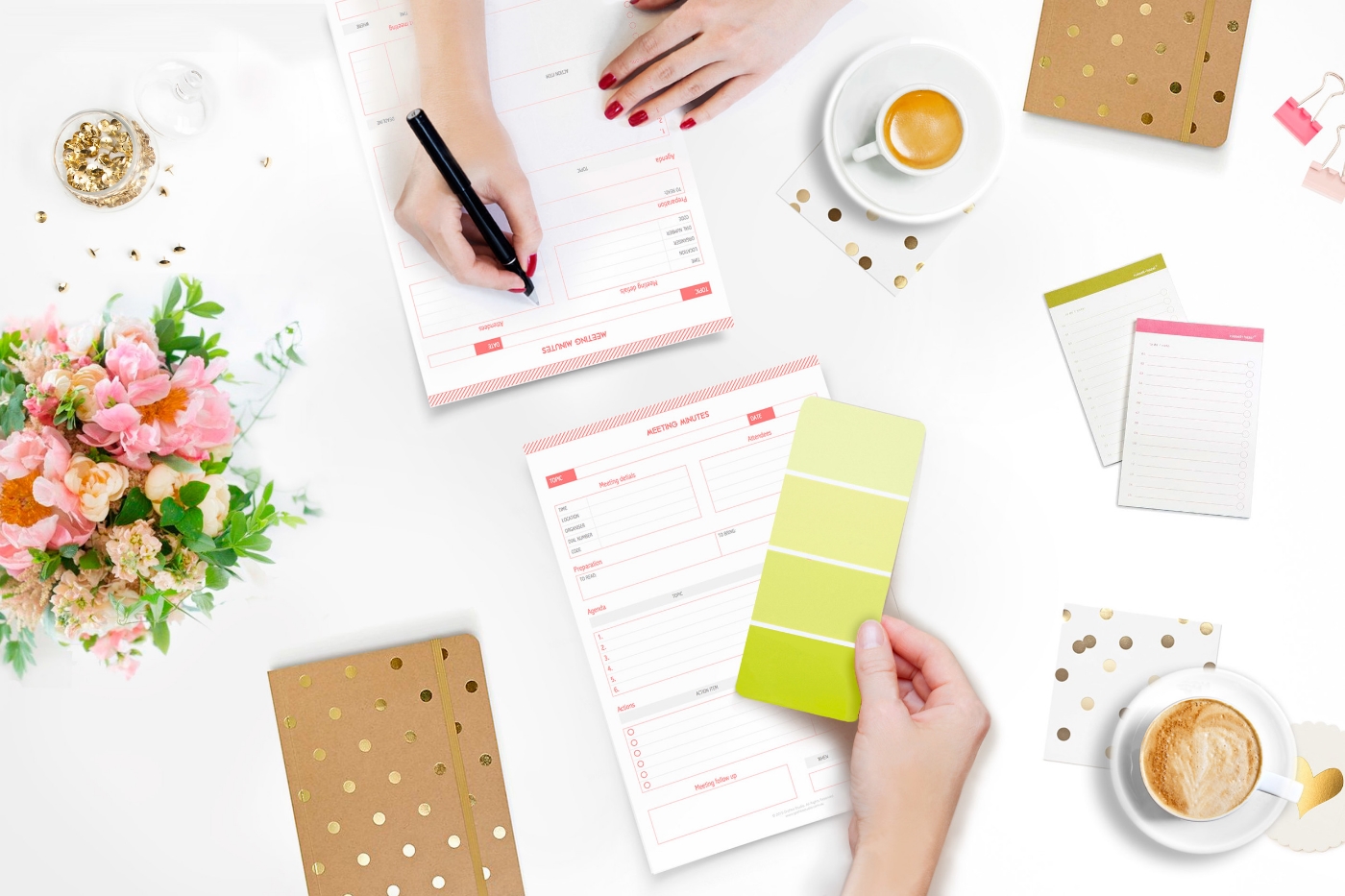
A planner is a document that combines the five tools above in one. The objective is keeping all the information together in one place. If you go to a meeting you can end up writing notes on your notepad, telephone numbers on post-it’s and the date of your next meeting on your mobile calendar. If you have a planner all the information will be in the same place.

A planner can help you organise your personal life, professional activities or an important event in your life, like a wedding, a holiday, or the arrival of your baby.

As everyone isn’t the same, it’s important to find the right planner that suits your specific needs best. To do this you may want to start by buying a kit that already has general calendars, checklists, an address book, etc. and then complete the planner with other personalised pages.

Printable planners give you the flexibility to print as many pages as you need of each tool (and only the ones you really need) and put together different kits to manage different aspects of your personal and professional life.

You can see same examples of planners at Grafika shop in Etsy.

Grafika Projects: Inside A Designer's Website
Client: Collected Interiors
Project: Art Direction, Photo Editing, UI/UX, Web Design and Development
Date: Launched in September, 2014

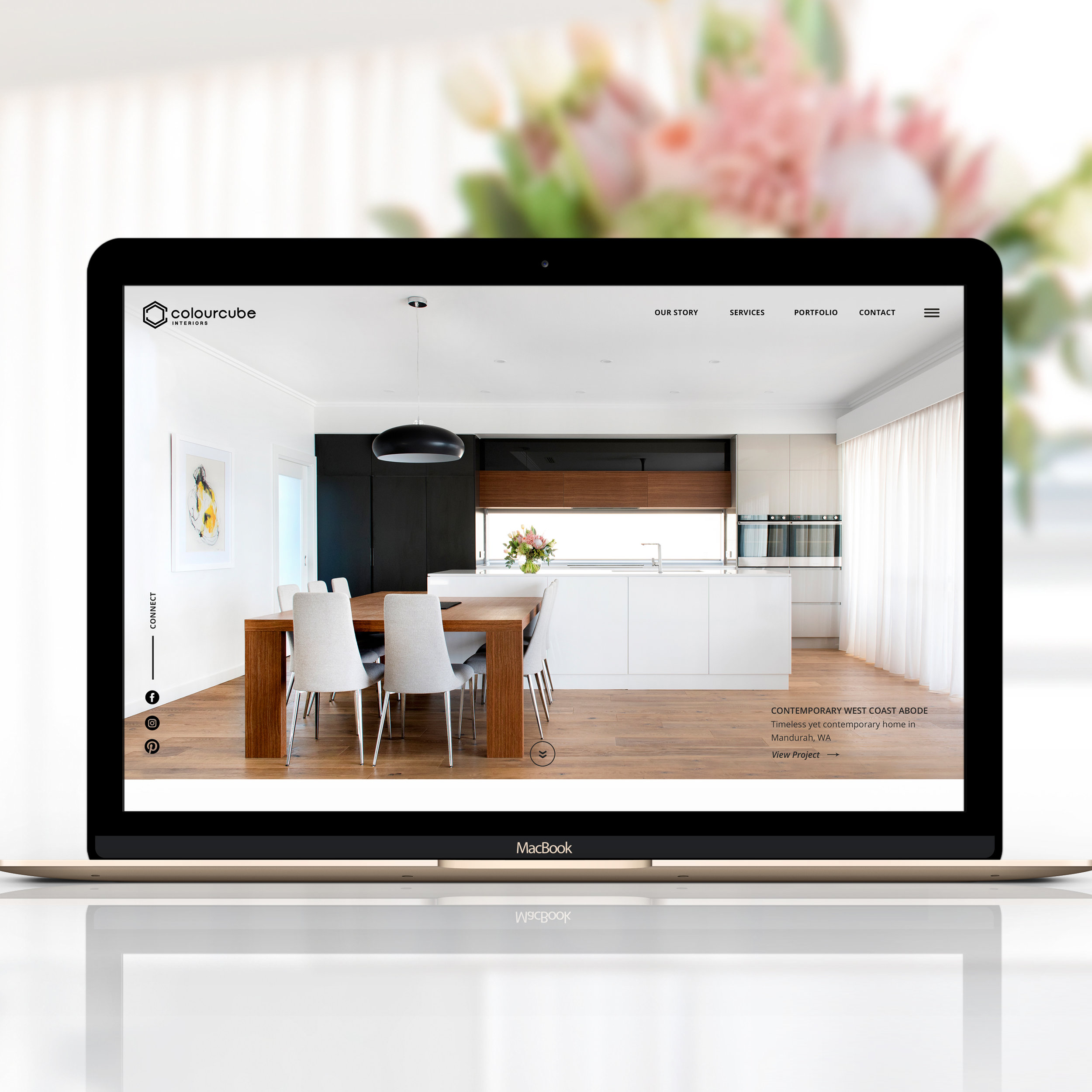
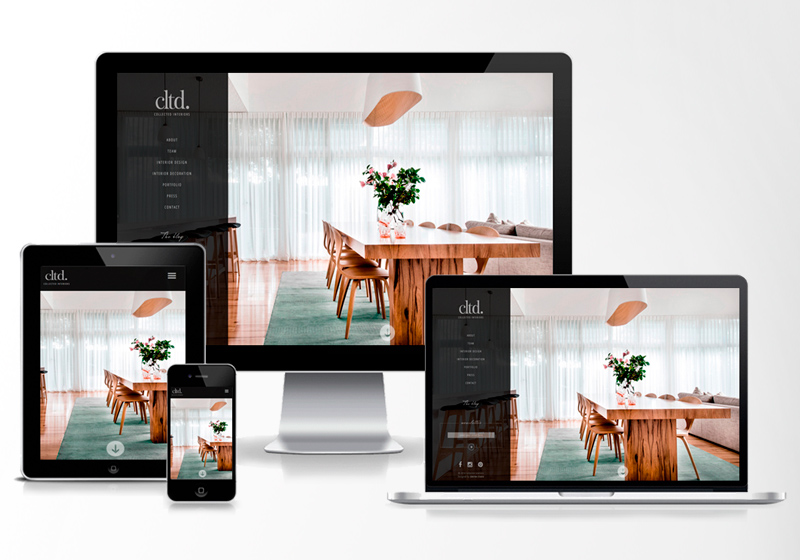
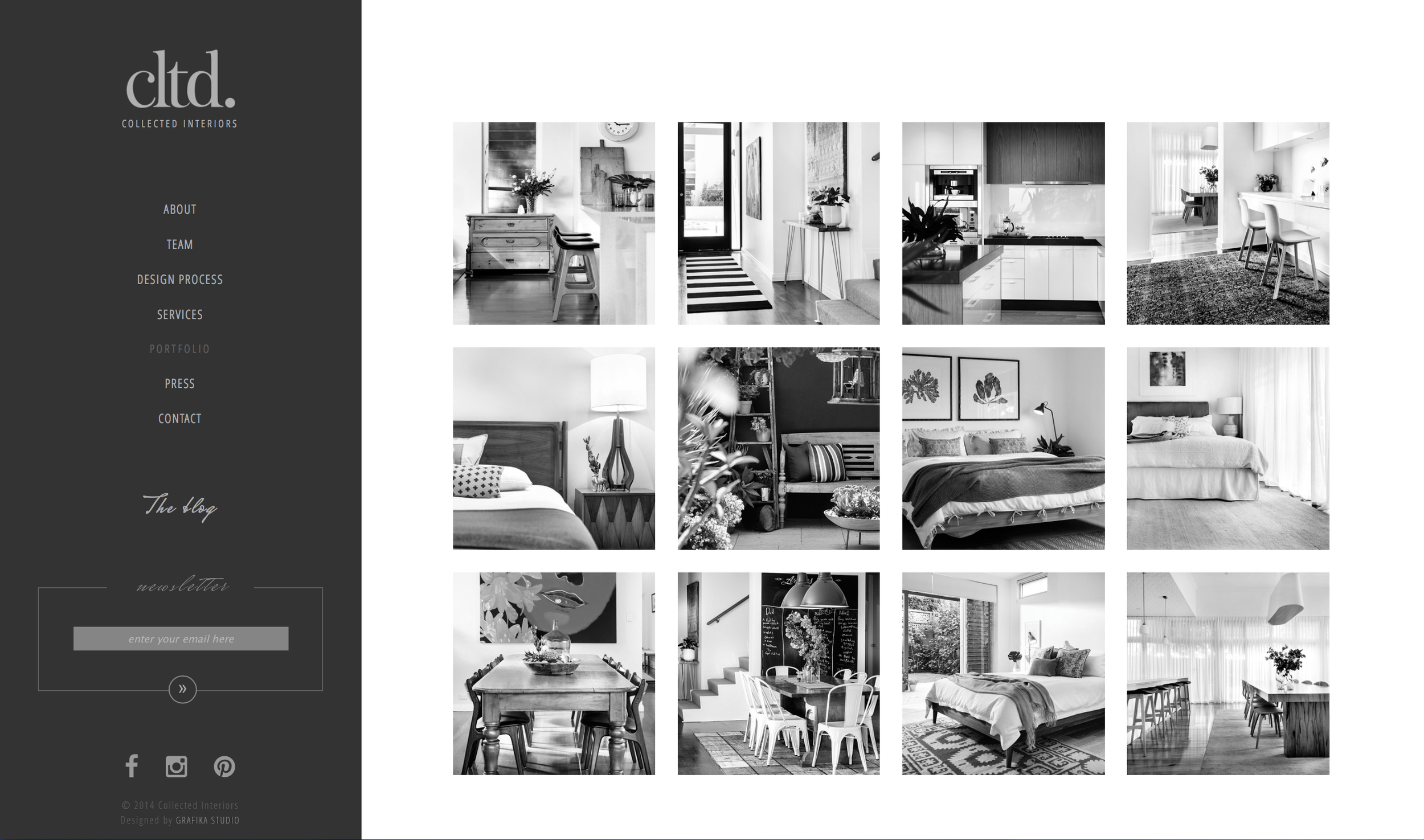
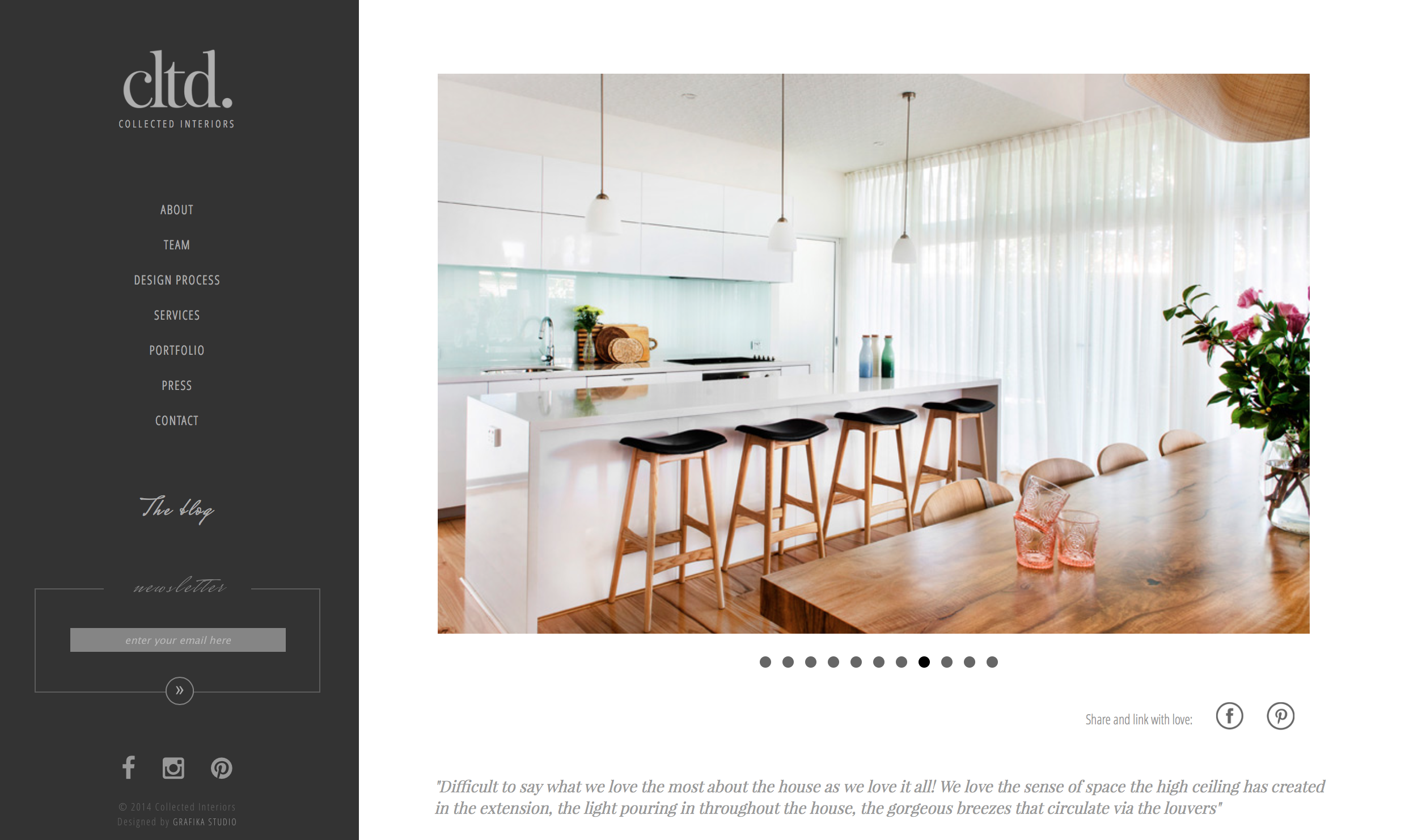
Collected Interiors website designed by Grafika Studio

I am a big fan of Perth interior designers Collected Interiors, so when I was asked to re-designed their website I immediately felt excited about this project.

The briefing was to create a sleek and modern new website, to display bigger images and to incorporate some interactive tools.

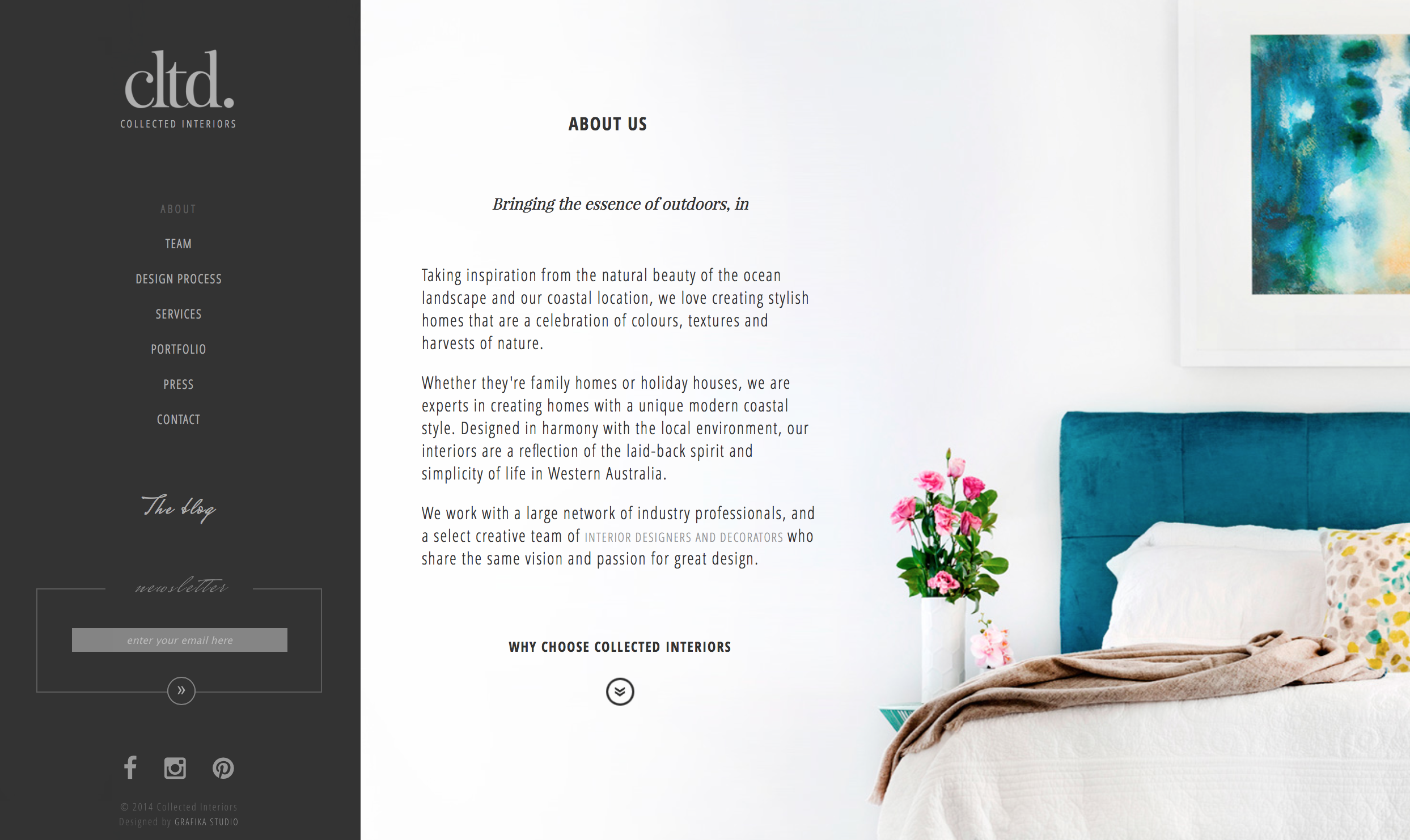
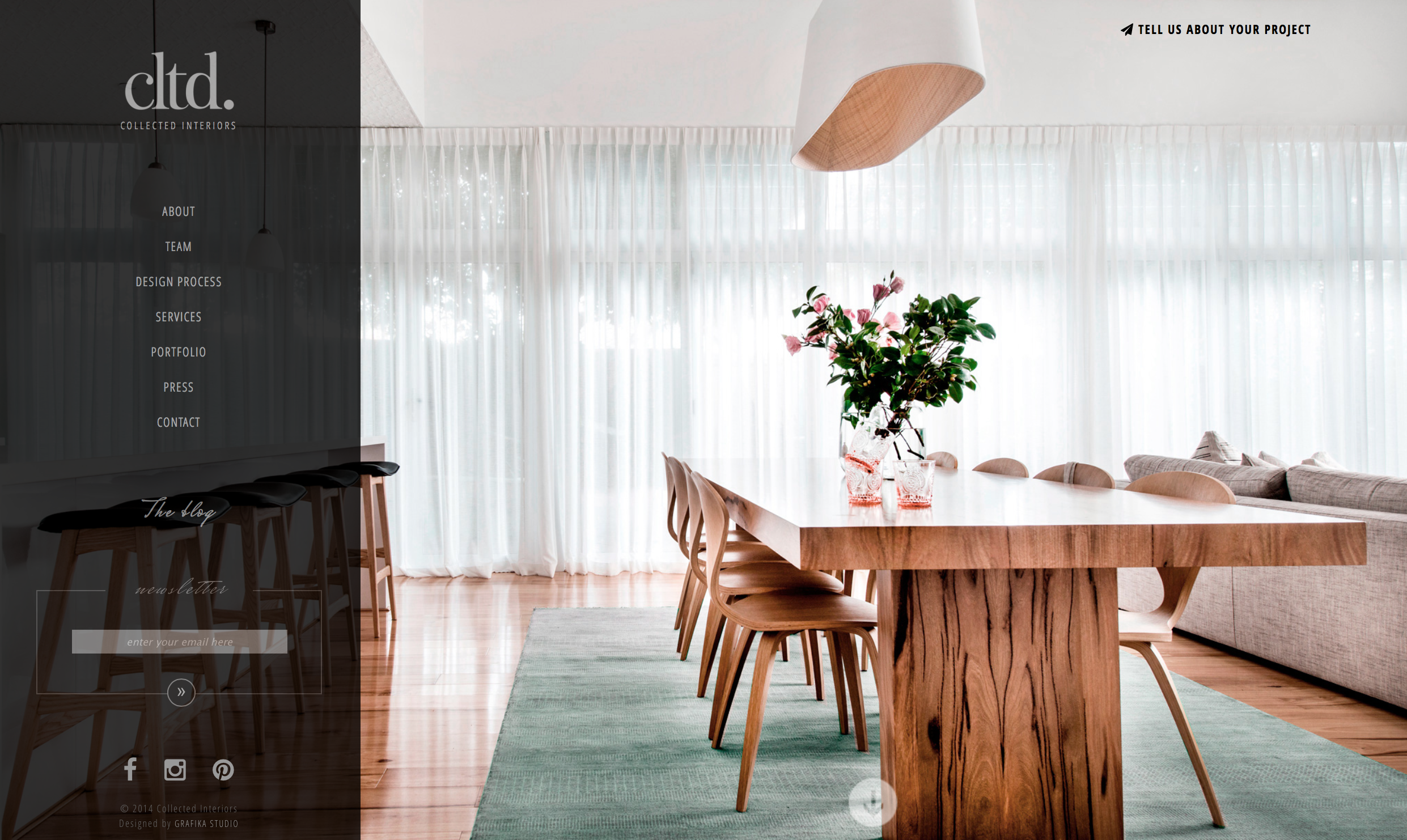
I created a custom-made design – no templates were used here – carefully thought to let the images shine. Full screen images in almost every page allow the visitor to get a taste of the designers' talent before even visiting their portfolio.

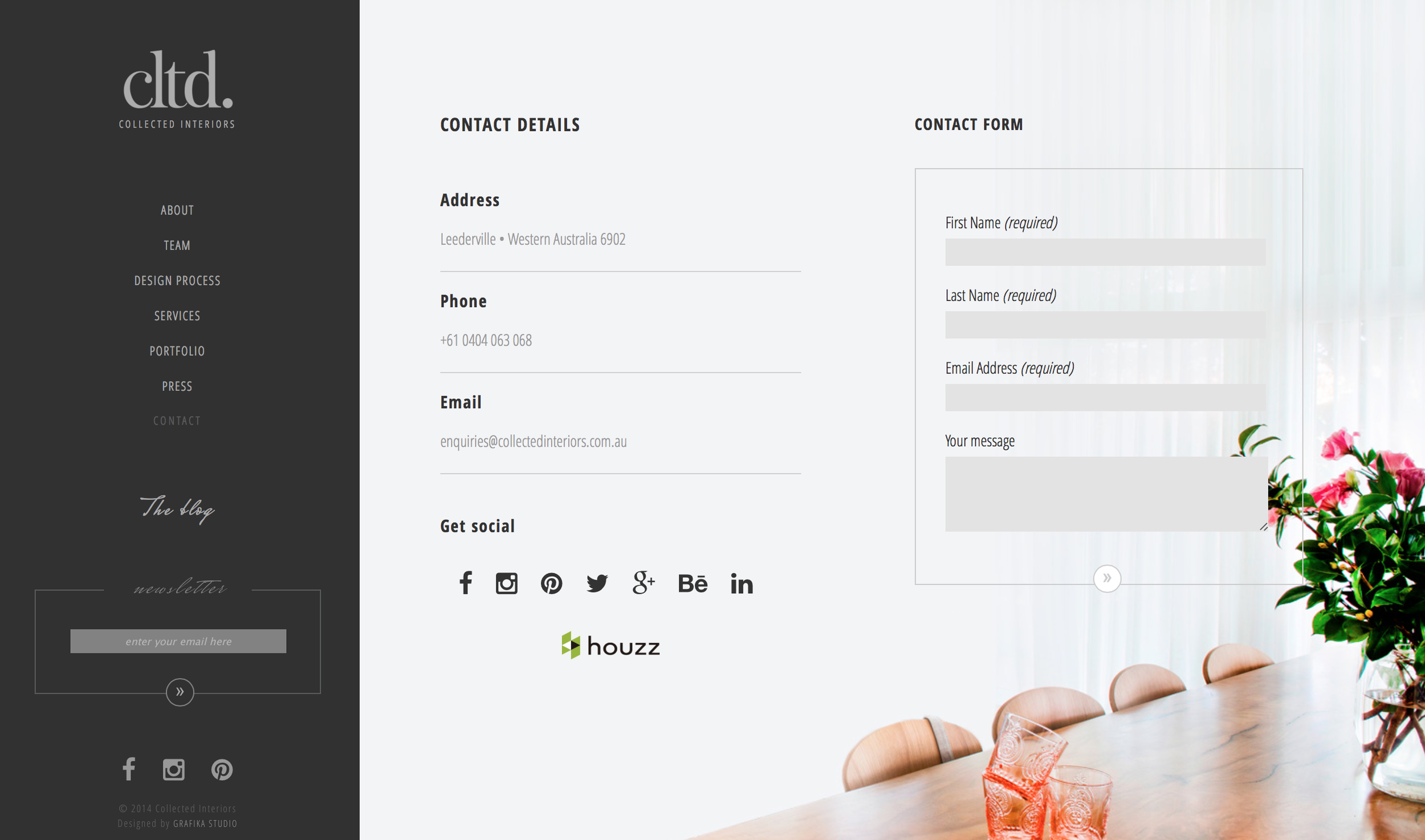
The design is simple and clean so that visitors can enjoy the beautiful photographs with no distractions. Condense typography, combined with serif fonts for a classy elegant touch, and a lot of white empty space achieve a modern and professional look & feel.


INSIDE A RESPONSIVE DESIGN

One of the major improvements made on this website was the responsive layout. The full-screen images made a fluid design necessary, so that they could automatically adjust to every screen size without being deformed.

The portfolio pages have a responsive slider with an advanced touch / swipe support built-in to facilitate the navigation from image to image on small devices.


THE USER EXPERIENCE

Every image was edited to achieve the perfect lighting in each interior space, and carefully selected so that the internal pages could flow from one to the other keeping a consistent feel across the entire website.

Every image gives a sense of tranquility to make the visitor want to stay longer on the site. Link effects were also eased to reinforce that sense of calm aimed to retain visitors and let them visit the site with no rush.


THE RESULTS

After the new website was launched Collected Interiors experienced an overwhelming success in social media, getting more than 300 Instagram followers in less than 24hrs, or more than 100 Behance followers in less than 24hrs, and many other successful stories. A SEO friendly website along with a link building strategy put this site at the top of the search engine rankings, busting visits and customer enquires.

Working together was easy and fun. Rosa is an intuitive and highly professional designer, who always figured out how to translate our ideas into a digital experience.
— Lisa Ewart, Creative Director of Collected Interiors -


Five simple tips for designer websites

1. Invest in high quality images

Images are the most important piece of marketing for any designer, not just for web design, but also for press, link building strategies, social media marketing and much more. Style your photographs, hire a professional photographer with the right equipment – and experience – to photograph interiors, and edit every image to correct small imperfections and lighting.

2. Keep a simple colour palette

A minimalistic colour palette will achieve an elegant, sleek and modern look in your website. A clean look & feel will let your images speak about your work and the way in which you do business with no distractions.

3. Learn to love the white space

Let the space breathe. Against what many people think, empty space is not a lack of design, it's actually an important design element, essential to achieve a polished and professional look in any website.

4. Apply a visual storytelling to your website

The entire website must tell the visitor your story and every page must conceived as a chapter of that story. The storyline must flow through an intuitive navigation, powerful images and a compelling message. Every aspect of the website design should be carefully and consciously selected to help to support the thread of the story.

5. Create an emotional connection

Design is an emotional business and your prospects will only become clients if they connect emotionally with your brand. The challenge is to create that emotional connection in a few minute visit to your website.

Call to actions will get you newsletter subscribers, blog readers, social media followers, etc, that will stay connected to your business after visiting your website. Use all these platforms to continue working on that emotional connection with them. Many visitors won't get in touch in their first visit but will be ready to work with you after a few interactions with your brand.


Are you interested in working with me for the design of your brand and website? Visit my Branding and Web Design pages for more information on my process, design package and pricing, and my Contact page to get in touch!

Our Printable Planners Collection


At the end of last year I looked for a simple printer-friendly planner to organised my own work in the New Year. However, everything I found had excessive design elements and colours, being quite distracting. I always thought that good design is as little design as possible so I decided to create my own planner with a clean and simple design.

My first planner was quickly sold out through my Etsy shop in less than a month, so I designed a whole collection of printable planners with a minimalistic, functional and stylish design, and no fuss or distractions. The collection covers three professional planners: a small business marketing planner, a photographer's planner and a blogger's planner.

To this new collection of professional planners launched in January I'm adding now in February a new range of personal planners to help you organise important life events: a wedding planner, a pregnancy and baby planner and a travel planner. These planners have a softer and more delicate design, and still in consistency with Grafika Studio signature style.

So, what's exactly a printable planner for?

My printable planners are organisation tools intended for specific professionals and creative jobs like bloggers, photographers, etc, and cannot be easily found in conventional shops. They contain calendars, checklists and other documents that can help organise your every day professional activities.

What does "printable" mean?

"Printable", in this context, is a digital document, usually a PDF, which is intended to be printed by the final user at home or at a print shop. After printing, they can be punched and organised in ring folders or be bound.

What size are they?

The printable planners have been designed for A4 sizes but can be easily adjusted or re-sized to proportional sizes (like A5 or American sizes like 8.5x11) by any standard printer.

Can a printable be edited?

No, a printable document is not intended to be modified by the final user. However you could edit the document with Adobe Acrobat.

What can I do if I need to edit the document?

If the printable document doesn't exactly suit your specific needs you can request some edits to Grafika Studio. Edits will be charged at a rate of AUD $10 per 20 min. time block.

Can I get the original editable file?

To be able to open and manipulate the original file you need certain design software and family fonts installed in your computer, as well as some design skills. It's usually easier to request changes to Grafika Studio instead of trying to do it by yourself.


Five Simple Tips To Build A Unique Brand

Your brand is the soul of your business. It's what identifies and differentiates your business from others. It's what makes you unique and special. Branding a business is not just about creating a logo, it's about creating perceptions in people's minds and love in customer's hearts.

A brand is represented by the branding, that is, all those visual elements that allow people to identify a product or a company. This can include the logo, colour scheme, typeface and other elements, and can be formalised in a document called style guide. Below is an example of my style guide.

Grafika-Studio-Style-guide.jpg

It's difficult to describe the entire process to build a brand. It starts with soul searching: find your strengths, your passions your vision and your personal style. Then set a sole goal: to get paid for doing what you love. And finally come up with a step-by-step plan to make it real. Start small but dream big.

Here are my five tips to build a unique, memorable, and timeless brand that reflects your style and represents you and your business for years to come:


1. Find Your Own Unique Brand Style

There are no two identical businesses, so you must explore and find what makes you different. Understanding your own distinctness is the first step to build memorable brands. Once you find it, write down your brand statement, that is a short sentence that states your uniqueness.

I found my own distinctness in the concepts of beauty, simplicity and style. They define what I do and how I do it, and I have summarised this in my brand statement: beautiful brands, stylist websites.


2. Deliver a Consistent Message

Letterheads, invoices, business cards, everything talks about you and the way in which you deliver your work. It's important that all your brand elements are well-coordinated across every channel and that message is clear and consistent. The style guide helps you achieve that consistency.


3. Build Brand Name Recognition

People must know who you are and what you stand for before becoming customers. Just delivering a consistent message won't be enough, make sure everyone "gets it". In a world that’s overloaded with information, only creative, unique and special brands can stand out and be easily recognised and remembered.


4. Invest In Brand Quality

Quality is a reflection of your business personality and how much you care about every project, every product and every client. Make sure your brand also reflexes your quality standards. Invest in professional photos, print in high-quality paper and proofread everything that you write, even if it's on your blog or social media pages. 


5. Communicate your brand and brand your communications

Take your brand online and communicate with your people, ask and answer questions, and participate in conversations that help you build the emotional connection with everyone in your market